
Pool Chiller Installation for Leander Pools
Pool chiller installation in Leander brings water temperature back down when Central Texas heat pushes a pool past refreshing. We size the unit to your pool, install it at the equipment pad, and set it up so summer swimming is comfortable again.
Request A Free Quote
Why pools here get too warm
People arriving from cooler states find this hard to believe until their first August. A pool sitting under months of direct Texas sun stops being a way to cool off and starts feeling like a warm bath, and no amount of nighttime cooling brings it back. Request a free quote, and we’ll size something that fixes it.
Shallow pools and light-coloured plaster heat up fastest, and an open backyard with no afternoon shade compounds it. By the peak of summer, a lot of corridor pools sit well above what most swimmers would call refreshing.
What a chiller does
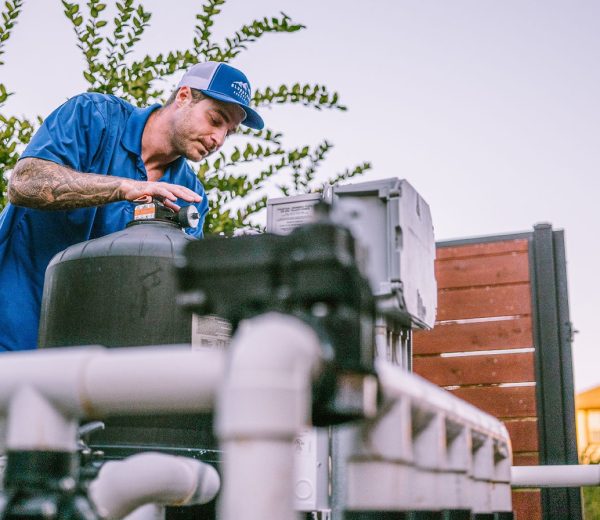
A chiller sits at the equipment pad and pulls heat out of the water as it circulates, then sheds that heat to the air. Mechanically, it works much like a heat pump running the other way round.
Water passes through on its normal return from the filter, so nothing about your plumbing changes fundamentally. The unit runs on a setpoint: you pick a temperature you want the pool to hold, and it works toward it whenever circulation is running. That last part matters, because a chiller only does anything while water is moving through it.
Sizing it to your pool
This is where these installs succeed or disappoint, and it’s worth more attention than the brochure figure.
An undersized unit runs constantly and never quite gets there, which is the most common complaint we hear about chillers people bought elsewhere. Sizing depends on your pool’s volume, how much direct sun it takes through the day, whether there’s any shade, and how far below ambient you actually want to sit.
We’d rather measure and specify properly than sell you the unit that happens to be convenient. If your pool genuinely doesn’t need one, we’ll say so.
What the install involves
It’s pad work rather than pool work, and it’s the same class of job as putting in a heater.
Siting the unit. It needs clear airflow around it and somewhere to shed heat, so where it sits on the pad matters more than people expect.
Plumbing it into the return. Water routes through the unit after the filter, with isolation so it can be bypassed for service.
The electrical connection. Dedicated supply, correct rating, bonding confirmed. This is the part we don’t improvise around.
Setting it up. Setpoint dialed in, then checked against how the pool actually behaves over a hot week.
Running it sensibly through summer
A chiller isn’t a set-and-forget box, and running it well makes a noticeable difference.
Because it only works while water is circulating, your pump schedule and the chiller need to agree. Overnight is often the most effective window, since shedding heat to cooler air is easier work than fighting the afternoon. Pools with a controller can coordinate the two automatically, which is why chillers and pad equipment are worth planning together.
If you also have a heater, the two aren’t in conflict. They serve opposite ends of the year, and a sensible setup simply doesn’t let both chase the water at once.
Where we install chillers
Across the corridor, with the most demand on the open, sun-exposed pools around West Lake Hills and Lakeway.
We also cover Leander, Cedar Park, Bee Cave, and the rest of the Lake Travis communities. See our areas served page for the full list.
Keeping it working
Like anything on a Texas equipment pad, a chiller lives outdoors in hard conditions and appreciates being looked after. Airflow needs to stay clear, and the water passing through it still needs to be balanced, since scale is no kinder to a chiller than to a heater.
Pools on weekly service get it checked as part of the normal visit, which is how a small issue gets caught in June rather than in the middle of the worst week of August.
FAQs
How warm does a pool actually get around here?
Warmer than newcomers expect. Through the peak of summer, a corridor pool in full sun regularly sits in the high eighties and can climb past ninety, which stops feeling refreshing and starts feeling like a warm bath. Shallow pools, light plaster, and open backyards with no afternoon shade all push it higher, and overnight cooling barely dents it once the heat settles in.
Would more shade or a water feature do the same job?
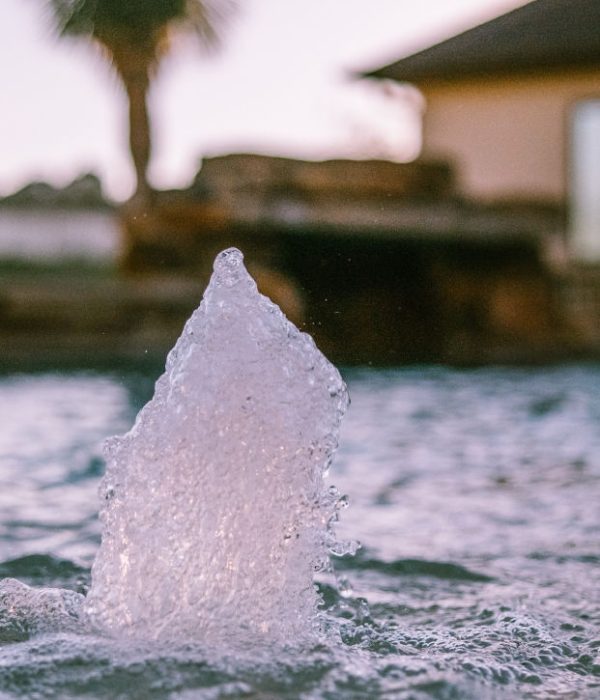
They help at the margins, but not enough to solve it. A fountain or waterfall sheds a little heat through evaporation and can take the edge off overnight, and shade slows the gain. Neither moves a pool meaningfully below ambient during a genuine Texas heatwave. If a couple of degrees is all you’re after, try those first. For real control, you need a chiller.
How cold will it actually keep the water?
You set a target and the unit works toward holding it, so it’s a setpoint rather than a fixed temperature. Most owners land somewhere in the low eighties, which reads as properly refreshing without being a shock to get into. How reliably it holds through the very worst stretch depends on sizing, which is exactly why we measure rather than guess.
Does it run all summer, or only sometimes?
Only when it’s needed and only while water is circulating, which is an important distinction. It works to a setpoint rather than running flat out, so it cycles as the pool drifts up. Most of the useful work happens overnight, when shedding heat into cooler air takes far less effort. Your pump schedule and the chiller need to line up for any of it to work.
Can a chiller and a pool heater work together?
They can, and plenty of pools here have both. They serve opposite ends of the year: the heater extends spring and autumn, the chiller makes July and August usable. What matters is the setup, so the two are never chasing the water at the same time. Configured sensibly, they simply hand off as the seasons turn, and you never think about it.
Where does the unit go, and how noisy is it?
It goes on the equipment pad, and placement matters more than people expect, since it needs clear airflow around it to shed heat. Boxing one into a tight corner is the quickest way to make it work harder than it should. On noise, it’s broadly comparable to an outdoor air conditioning unit, so we think about where it sits relative to patios and bedroom windows before fixing anything down.
Will hard water cause problems for a chiller?
It can, in the same way it troubles a heater. Water passes through the unit, so scale from our limestone water builds up inside over time and gradually makes it work harder for the same result. It isn’t a reason to avoid one; it’s a reason to keep the water properly balanced. That’s the single best thing you can do for any equipment on a Central Texas pad.
Tell us about your pool and how much sun it takes, and we’ll size something that fixes it.