
Pool Pump Repair and Replacement Near Leander
Pool pump repair in Leander covers noisy, leaking, and failed pumps. We diagnose the real fault before touching anything, repair seals, capacitors, bearings, and impellers where we can, and recommend replacing the pump only when that’s honestly the right answer for you.
Request A Free Quote
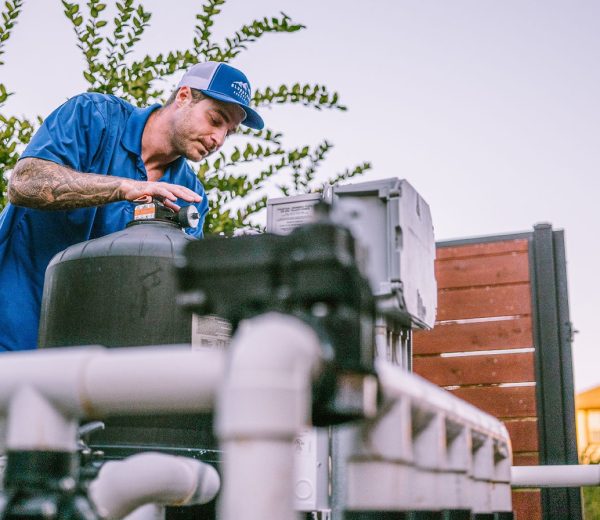
The pump is the heart of the pool
When a pump fails, everything else follows. Water stops circulating, the filter can’t filter, chlorine stops distributing, and a pool that looked fine on Monday can be cloudy by Friday. So a struggling pump is worth dealing with quickly rather than waiting to see what happens. Request a free quote, and we’ll diagnose it.
We repair and replace pool pumps across Leander and the northwest Austin corridor. Fully insured, and we’ll tell you honestly whether yours is worth fixing. Before you call, our guide on why a pool pump stops working covers the safe checks to try first.
What pump problems actually sound like
Pumps rarely die silently. They tell you first, and knowing what you’re hearing helps.
A screaming or grinding noise is usually bearings. The motor is still running, but the bearings that let it spin smoothly are failing, and once they go, the motor follows.
A pump that won’t hold prime is pulling air somewhere, often a bad lid o-ring, a cracked lid, or a leak on the suction side. Air in the system means the pump isn’t moving water properly even when it sounds fine.
Water underneath the pump usually means the shaft seal has gone. Deal with that one quickly, since a failed seal lets water reach the motor, and a motor that gets wet is a replacement rather than a repair.
A pump that hums but doesn’t start is often a bad capacitor, which is a genuinely cheap fix that people frequently replace whole pumps over.
A pump that trips the breaker is telling you something electrical is wrong, and that’s one to stop using until it’s looked at.
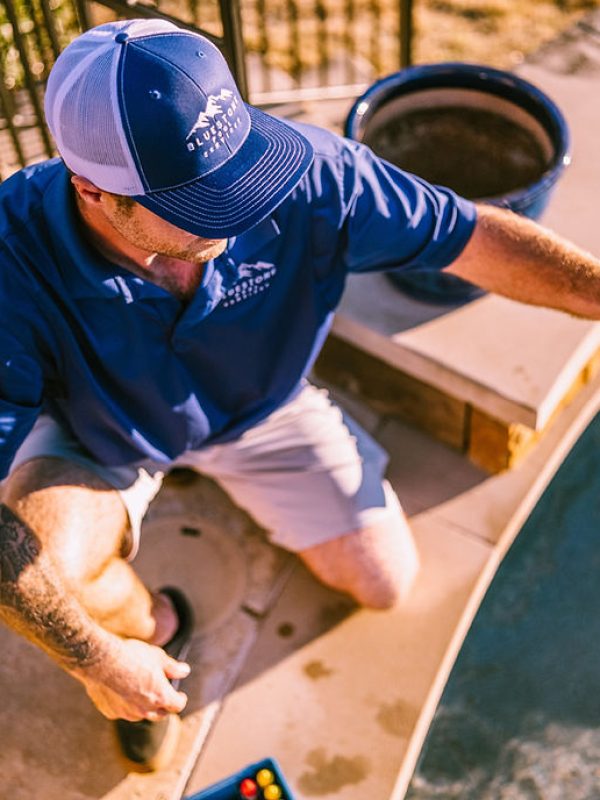
What we do
Diagnose the actual fault. Half the pumps we’re called out to aren’t the problem. A pump straining against a packed basket or a clogged filter sounds like a failing pump and isn’t one.
Seals, O-rings, and gaskets. The common wear items, and often the whole fix.
Capacitors and electrical components. The cheap parts that strand people.
Impellers. Cracked or clogged impellers kill flow, and a partially blocked one is easy to miss.
Motor replacement. When the motor is genuinely gone, sometimes the motor alone can be replaced rather than the whole assembly.
Full pump replacement. When that’s honestly the right call, and not before.
Why pumps fail early in Central Texas
Pumps here work harder than pumps almost anywhere, and they age accordingly.
The season is long. A pool in a milder climate might run its pump seriously for four or five months. Ours run hard for most of the year, and that’s a lot of hours on a motor.
The heat is punishing. Equipment pads sitting in direct Texas sun cook. Plastic gets brittle, seals dry out and crack, and motors that would run cool somewhere else run hot here, all season.
And hard water doesn’t help. Calcium builds up through the system and makes everything work a little harder than it should.
Shade over the equipment pad genuinely extends pump life, and it’s one of the cheapest things a pool owner can do.
Repair or replace
The honest test is the age of the pump and what failed.
Seals, O-rings, capacitors, and impellers are repairs, on almost any pump worth keeping. A motor that’s burned out on an older pump is usually a replacement, because you’d be paying twice otherwise.
One thing worth knowing: if you’re replacing an old single-speed pump anyway, a variable-speed model is worth costing out. There’s more on that in the questions below.
Whatever the answer, you’ll hear the reasoning before any work happens. Our full pool repair service covers the rest of the equipment if the pump turns out not to be the only issue.

What a struggling pump costs you
A pump that’s on its way out doesn’t just risk failing. It costs you money while it’s still running, and that part is invisible.
A pump fighting a clogged filter or a bad impeller draws more power to move less water, so your electricity bill climbs while your circulation drops. Meanwhile, the pool gets worse, because water that isn’t circulating properly isn’t being filtered or chlorinated properly either, and that shows up as chemistry you can’t seem to hold and water that won’t quite clear.
Then it becomes a bigger problem. Poor circulation is the most common reason a pool goes green, and a green pool means a recovery job on top of the pump repair you were already facing.
So a pump making a new noise is worth looking at now, while it’s a seal or a capacitor, rather than in August when it takes the whole pool down with it.
Where we repair pumps
Across the corridor, from Leander out to Liberty Hill.
We repair pumps in Cedar Park and Lakeway too, plus Georgetown, Round Rock, and the Lake Travis communities.
See our areas served page for the full list.

Pool pump repair FAQs
Why is my pool pump so loud?
Usually failing bearings, which produce a distinctive screaming or grinding noise as they wear. But a pump can also get loud simply because it’s starving for water, and that’s a far cheaper problem, often a packed skimmer basket, a clogged filter, or a partly closed valve on the suction side. We always check the simple causes first, because condemning a pump that was only gasping for flow is an expensive mistake to make.
My pump is leaking water. Is that serious?
It can be, and the timing matters enormously here. Water pooling underneath the pump usually means the shaft seal has failed, and that seal is the only thing keeping water out of the motor behind it. Caught early, it’s an inexpensive seal replacement and the pump carries on for years. Left running for weeks, the water gets into the motor windings, and you’re buying a whole new pump instead.
My pump hums but will not start. What is wrong?
Most often it’s a failed start capacitor, which is a genuinely inexpensive part and a quick swap. That humming-but-not-turning symptom is one of the single most common reasons people replace an entire pump they didn’t need to replace, because it sounds terminal and isn’t. Before you spend on a new pump, it’s absolutely worth having someone check the capacitor, since it can be the difference between a small repair and a large purchase.
How long should a pool pump last?
In Central Texas, noticeably less than the manufacturer’s figure, and the reason is hours plus heat. Pumps here run far more hours a year than in a cooler climate because our season is so long, and they do it while sitting in direct sun on an unshaded pad that bakes the housing and dries the seals. Shading the equipment pad and keeping the filter clean so the pump isn’t straining both add real years.
Should I replace my pump with a variable speed model?
If you’re replacing an old single-speed pump anyway, it’s worth serious consideration. Variable-speed pumps draw far less electricity, and because pumps here run such long hours through our extended season, that difference compounds over a year in a way it wouldn’t up north. They also run quieter at low speed. We’ll walk you through the tradeoffs honestly rather than pushing you toward the bigger sale, and if your single-speed has life left, we’ll say so.
Can you repair the pump or do I need a whole new one?
The dividing line is the motor. Everything on the wet end- seals, O-rings, impellers, diffusers, and the electrical bits like capacitors- is repairable, and usually inexpensive ones that return the pump to full service. A burned-out motor is the other story: on an aging pump, rewinding or replacing the motor costs enough that you’re better off putting the money toward a new unit. We’ll tell you plainly which side of that line you’re on.
My pump keeps tripping the breaker. What should I do?
Stop running it and have it looked at properly. A pump repeatedly tripping the breaker is an electrical fault, whether that’s a failing motor winding, a water-damaged capacitor, or a wiring problem at the pad, and none of those improve by resetting the breaker and trying again. Continuing to run it isn’t safe around water. This is the one pump symptom we’d tell you to call about rather than wait until your next service visit.
Tell us what the pump is doing, and we will figure out why. No guessing, no surprise bills.